After the Impact: What Potholes Really Do to Steering, Suspension and Alignment
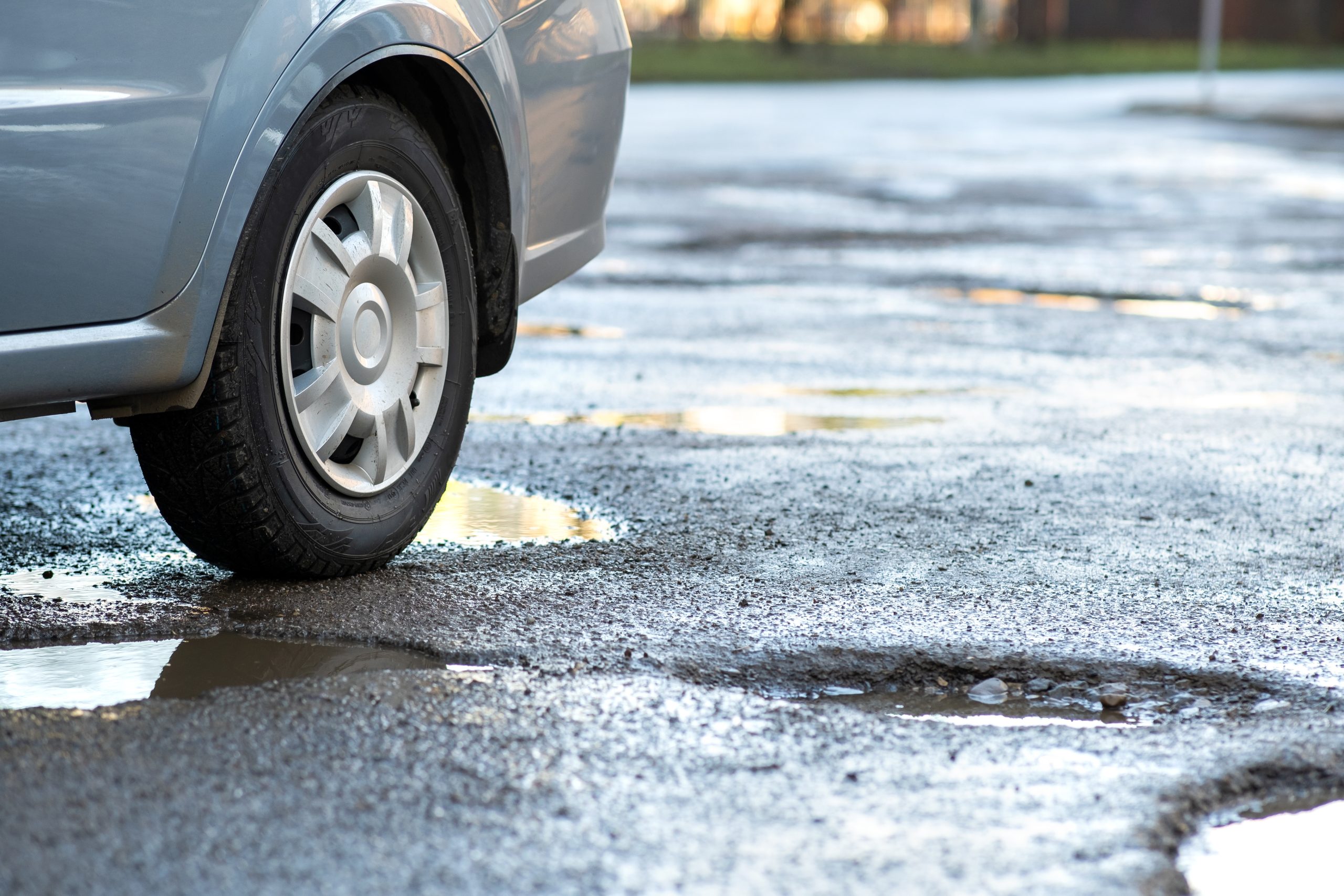
In regions shaped by harsh winters, heavy traffic, and constant freeze-thaw cycles, potholes aren’t occasional, they are a normal feature of the commute. As road conditions continue to evolve, so too does the need for replacement components engineered not just to meet original specifications, but to withstand the realities of today’s driving environment. For automotive repair facilities, adverse road conditions also present an opportunity for an informed conversation on the with vehicle owners also a consistent trigger for conversations that can uncover hidden wear before it leads to more costly repairs.
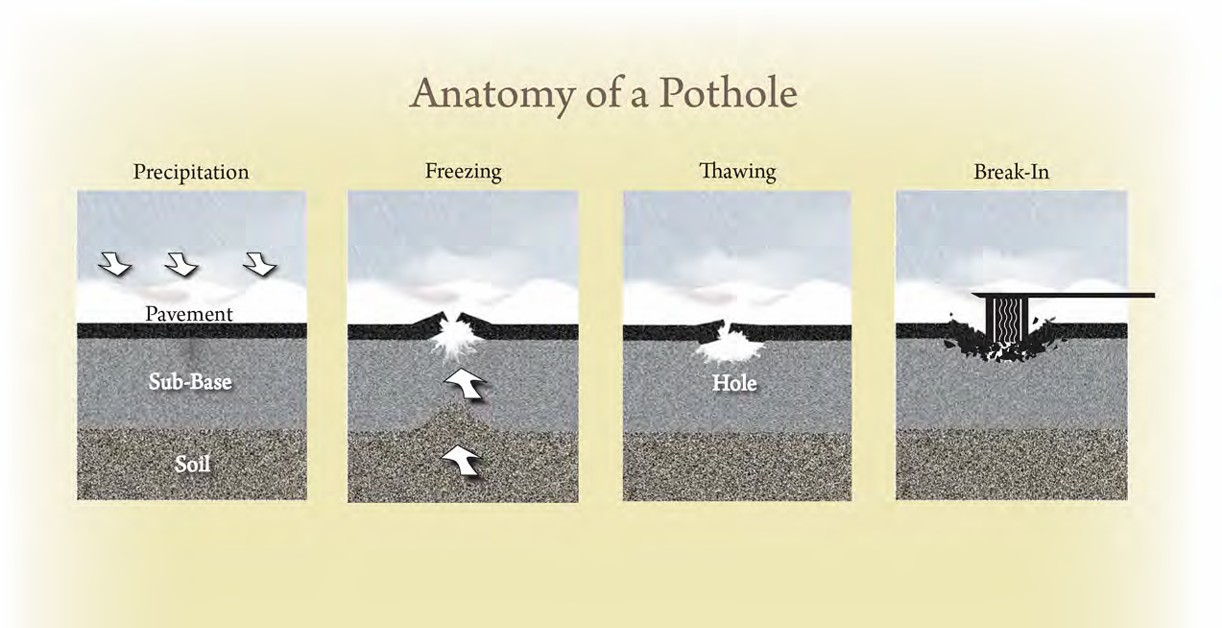
https://www.dot.ny.gov/programs/pothole-rpt
When a vehicle comes in for service, particularly after a tough winter season, pothole damage is often part of the story, even if it hasn’t been immediately identified. A simple question like “Have you struck any potholes recently?” can quickly connect customer concerns to potential underlying issues.
First Point of Impact: Wheels, Tires and Tire Profile
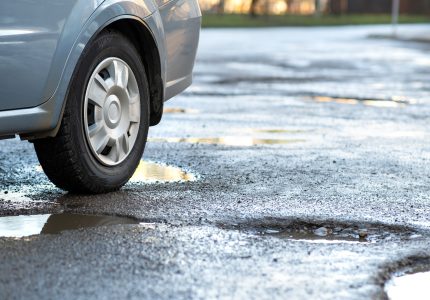
The initial impact is typically absorbed by the wheels. Depending on the severity of the strike visible damage such as bent rims, sidewall bulges, or gradual loss of tire pressure may occur. Tire profile plays an important role here as well. Lower-profile tires provide less cushioning, transferring more impact energy directly into the suspension system—where repeated stress can accelerate component wear.
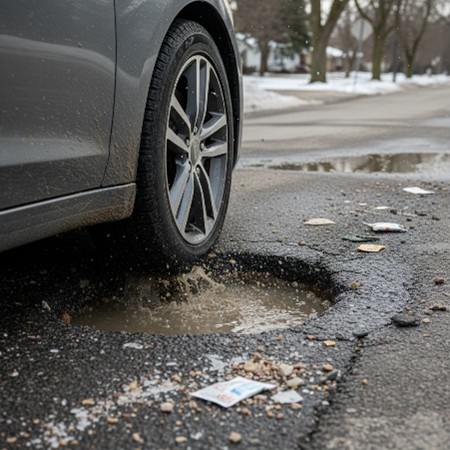
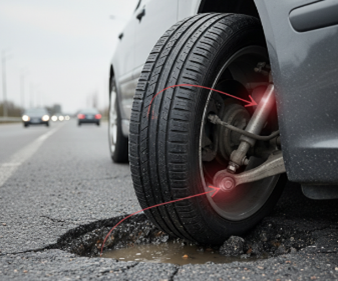
From there, the impact load moves into steering and suspension components, including, control arms, wheel bearings, tie rod ends, shocks and struts. Unlike a typical road imperfection, a pothole creates a sharp, concentrated force as the wheel drops and then strikes the far edge. In extreme cases, this may bend or distort a suspension component, such as a control arm. While immediate failure is atypical, repeated impacts may contribute or accelerate the premature failure of a part.
The Gradual Damage You Don’t Immediately See
Over time, protective seals can weaken, allowing lubrication to escape and contaminants such as water, dirt, and road salt to enter. This combination accelerates internal wear while small shifts in alignment geometry and early-stage material fatigue begin to develop, often without obvious warning.
Customers may report loose steering feel, vibration in the steering wheel, a drift or pulling of the vehicle, clunking over bumps, or increased ride harshness. Often, these are the tangible indicators that suspension components have been affected. These may be combined with uneven tire wear – another sign of an out-of-spec vehicle alignment.
Suspension components, such as control arms, play an integral role in maintaining alignment and ensuring correct handling & stability. Over time, even minor wear can cumulatively add up to alter vehicle dynamics, and because these components operate under constant load, deterioration tends to progress quickly under continued road stress.
Alignment: The Most Common and Overlooked Result
One of the most common, and sometimes overlooked, results of a pothole strike is a shift in alignment. What may be considered as a minor impact can alter suspension geometry enough to affect tracking and accelerate tire wear. As a result, an alignment check is often the recommended next step, not only to confirm a potential out of specification condition but to create a vehicle performance restoration plan.
In some cases, restoring proper alignment may require more than an adjustment on the rack alone. Renewing worn components, new replacement hardware, or the use of alignment aids, such as shims or bolts may be necessary to correct caster, camber and toe angles.
Matching Replacement Parts to Real-World Conditions
 Where replacement is required, a customer-oriented solution is to take actual, real-world use conditions into account. Combining the choice of replacement component with actual vehicle use helps reduce repeat visits and improve long-term outcomes.
This is where part selection and choice become increasingly important.
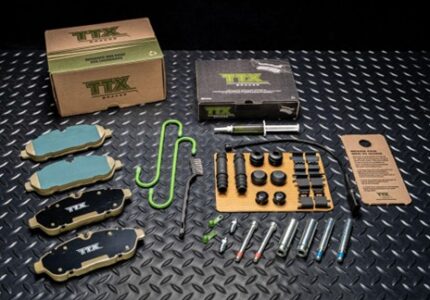
For example, engineered repair solutions like Mevotech Supreme and TTX programs are designed up with real-world operating conditions in mind. When a vehicle rolls into a repair facility for replacement of a suspension or steering component, it is often not in the same condition as when brand new off the lot. The challenges of daily commuting, such as potholes, constant stop-and-go traffic and harsh environmental conditions, can put stresses and wear and tear on individual components, with compounding effects on the entire vehicle suspension system.
The design of the original part may not always take these stressors into consideration, and these factors can be intensified when a vehicle is used in a working or ridesharing role. To optimize long term real-world performance, vehicles need a better-than-original repair solution. They need replacement parts engineered for the challenges they face day-to-day and that address common failure points in the OE-style parts.
Engineering Differences That Matter Over Time
This is where component selection becomes increasingly important. Solutions like Mevotech’s Supreme line, featuring metal, greasable ball joints, provide added durability and serviceability in everyday driving conditions, while purpose-built options such as the TTX™ line are engineered for higher loads and more demanding environments. Supported by enhanced sealing, reinforced housings, and advanced materials, including sintered metal components, these designs help improve resistance to contamination, maintain lubrication, and better withstand repeated impact, ultimately contributing to longer service life and more consistent performance.

As severe road and usage conditions continue to present a challenge to vehicle undercar components, selecting parts that are engineered for the real-world, can make a measurable difference in durability, keeping alignment retention, and long-term service outcomes. Potholes may be unavoidable, but their long-term effects don’t have to be, because the damage they cause is often gradual and not immediately visible, early identification is key.
 In practice, it starts with a conversation, connecting what the customer is experiencing to what may be happening beneath the vehicle. Done well, that conversation supports more accurate diagnostics, better repair decisions, and ultimately, greater trust at the counter
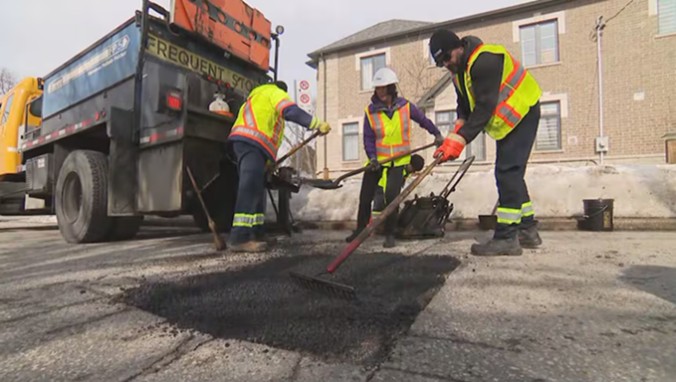
Toronto city crews and Mayor Olivia Chow were out on a pothole blitz across the city. (Brice Petitfils/CBC)